Remote and outdoor labor forces operate a lengthy method from help, in every feeling. When something fails on a farm track, a forestry block, a wind farm, a rail passage or a building site 2 hours from the local healthcare facility, there is no fast back-up. Your team is the response.
That truth adjustments exactly how you must think of first aid training. Conventional one or two day class courses, showed in city offices, still have their location. However, for many employers, express first aid courses and fast CPR training are what make routine, trustworthy training feasible. If individuals can not save a complete day of rest the work, they commonly wind up without training at all.
I have actually educated outside workers that quietly admitted they had actually refrained from doing any kind of first aid or CPR courses for 8 to ten years, simply because they can not warrant shedding a day of efficiency. Once their supervisor switched over to express first aid training, participation leapt, and the overall requirement of response in drills improved within a solitary season.
The goal is not to tick a compliance box. The purpose is for the very first individual on scene to act with speed, tranquility, and capability, even in severe atmospheres. Express first aid, when designed well, can support that.
Why remote and exterior labor forces require a different first aid mindset
If you run a metropolitan office, most clinical emergencies obtain an expert rescue action within mins. For a team operating in remote or rugged terrain, the time from injury to innovative treatment may be an hour or more. Those extra minutes alter everything.
In remote and exterior environments, you frequently deal with a mix of elements. There may be limited interactions, lengthy stretcher brings, bad weather condition, and improvisated equipment. Hazards are additionally various. Quad rollovers in agriculture, chainsaw injuries in forestry, drops from elevation in construction, and cold water immersion in coastal work all appear more often than city cardiac arrest at the printer.
In my experience, 3 shifts in believing make the greatest difference for remote teams.
First, the basic first aid course content need to be adapted to the real area dangers. Rural and outdoor employees require more ecological emergency training, even more circumstance exercise with restricted gear, and even more emphasis on improvisation.
Second, workers have to expect to provide look after longer. That means stronger basic life assistance abilities, not simply a fast review of CPR and defibrillation. Look after bleeding, breathing, and shock can easily extend to 30 to 60 minutes prior to rescue arrives.
Third, training has to be regular sufficient and sensible sufficient that individuals do not ice up or forget. This is where express first aid courses and fast first aid training confirm important. Click here Short, focused sessions delivered more often tend to stick better than a big block of material delivered when every couple of years.
What "express" actually means in first aid and CPR training
The term express first aid course gets utilized freely. Often it implies a solid, compressed program that appreciates time without cutting edges. Various other times, it is bit greater than a hurried lecture for a certificate theoretically. The difference remains in how the course is structured and what is required previously and after the classroom session.

A well created express first aid or express cpr course generally does 3 things.
It steps background theory to self paced understanding. Trainees full online components prior to they arrive. They cover legal responsibilities, basic composition, and vital concepts at their very own rate. This indicates the in person time can concentrate on sensible work.
It tightens the focus to the skills most pertinent to the workers. For remote and outdoor staffs, that suggests heavy focus on handling blood loss, fractures, spinal worries, hypothermia, warmth health problem, asthma, anaphylaxis, and CPR. Much less time is spent on reduced danger, low influence conditions.
It requires evaluation that demonstrates skills, not simply attendance. A fast first aid course can legitimately honor a first aid certificate if individuals show, under some pressure, that they can carry out crucial abilities to common. Short does not require to imply superficial.
By contrast, be cautious of fast first aid courses or fast cpr courses that guarantee certification with almost no sensible analysis, or no possibility to practice abilities on manikins, or no scenarios that show your workplace. Fast certification is attractive, yet if the training does not stand up under stress and anxiety, it can produce incorrect confidence.
The core abilities that can not be compromised
Express first aid courses live or pass away by what they maintain, not what they reduced. For remote and exterior employees, certain abilities are non negotiable, also in fast first aid courses or fast cpr refresher courses.
At a minimum, any type of express first aid training for these environments must leave individuals competent in the following cluster of skills.
They must have the ability to run a fast scene survey and main assessment. That includes hazard sign in dynamic atmospheres, calling for assistance early, and prioritising life dangers prior to second injuries.
They should fit with first aid and cpr as a mixed feedback. That suggests effective breast compressions, rescue breaths where proper, safe use an AED, and rotation in between rescuers to minimize exhaustion during extended CPR. Several express cpr courses target at metropolitan occurrences where rescue feedback fasts. For remote employees, express cpr training need to prepare for longer efforts.
They must handle significant blood loss with straight pressure, pressure dressings, and, where proper and lawful, tourniquets and haemostatic dressings. Forestry and construction websites specifically see injuries where blood loss is the critical factor.
They should secure suspected spinal injuries on unequal ground with really minimal equipment. In a genuine occurrence, you seldom have a full paramedic set. A fast first aid course that educates individuals to improvisate with jackets, ropes, and knapsacks is better than one that just shows book techniques.
They needs to identify ecological hazards promptly. Hypothermia, hyperthermia, warm stroke, dehydration, and lightning threat behave really in a different way in remote terrain than they carry out in community. Outside employees need more than a passing slide on these topics.
Once these foundations are in area, express first aid courses can layer in allergies, asthma, diabetes, seizures, minor wound care, and other regular issues. For some teams, particularly those managing kids in outside education or rural childcare, express child care first aid courses also require components on choking, febrile convulsions, and paediatric CPR ratios.
Express childcare first aid for outside settings
Many child care workers and instructors are now leading children right into woodlands, ranch sees, outdoor education camps, and nature play programs. The risks are different to a classroom. Children stray, climb, react highly to insect stings, and end up being hypothermic or dehydrated faster than adults.
An express childcare first aid course that mirrors a common classroom program misses that truth. Express childcare first aid training for outdoor settings must cover 3 added dimensions.
First, paediatric first aid and cpr technique have to make up real terrain. Rescuers commonly try child CPR on picnic tables, wet ground, or cramped car seats. Training must provide staff time to attempt CPR on kid and baby manikins in these awkward positions, not just on a flat tidy floor.
Second, an express childcare first aid program requires a more powerful focus on allergic reaction and asthma administration in the area. That implies sensible drills with adrenaline car injectors, spacer tools, and inhalers, and practical situations where one grown-up manages numerous troubled children at once.
Third, the course should speak about team monitoring under stress and anxiety. In every real occurrence I have actually examined that involved youngsters outdoors, there was at the very least a single person doing first aid and a single person shepherding or calming the remainder of the group. Training that thinks a single kid and a solitary grown-up disregards just how child care actually works.
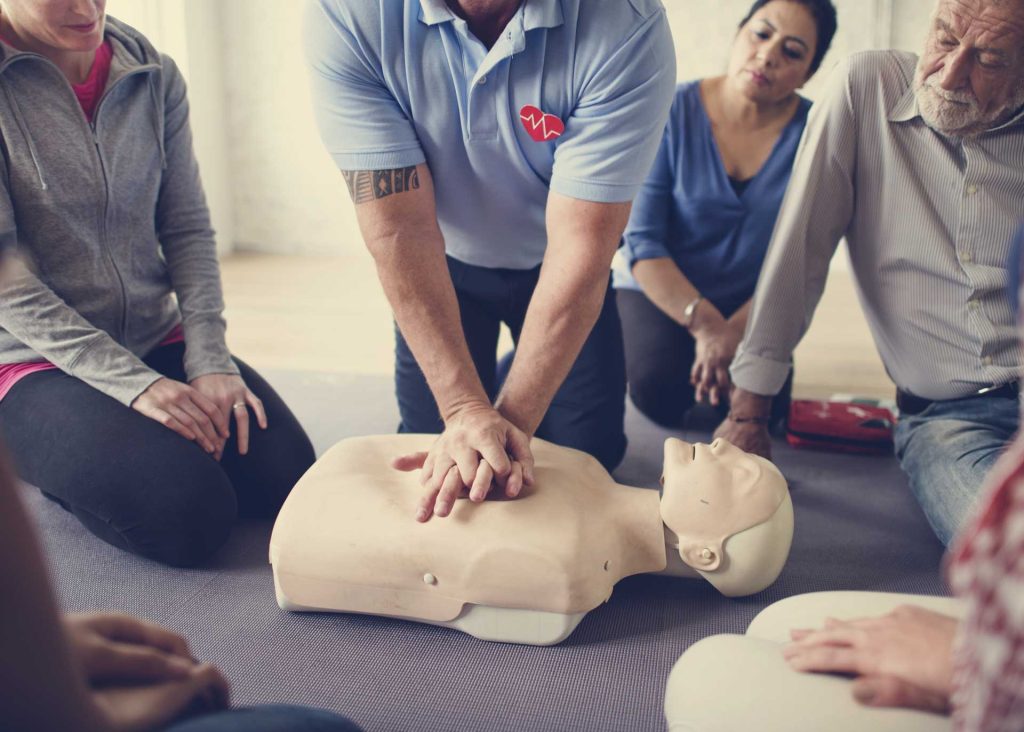
Providers that provide express childcare first aid courses tailored to outside programs are still a minority. When you look for an express childcare first aid course near me, ask particularly about ecological and paediatric content that shows your tasks. A generic program might not handle that nuance.
Making express courses benefit remote rosters
A huge advantage of express first aid courses is arranging flexibility. Remote and outdoor work frequently runs on rosters, change patterns, and seasonal peaks that do not match a common service week. A standard 2 day first aid course can eliminate an important work home window, especially at harvest, lambing, damp period preparation, or mid project.
I have seen three versions function especially well.
Some companies run brief express first aid and cpr courses at change transition factors. Crews coming off a turning stay on an additional half day to finish sensible training, after finishing on the internet content while on website throughout reduced danger periods.
Others divided fast first aid training into components throughout a number of weeks. Employees complete a 2 or three hour express cpr course first, after that a different half day concentrated on injury management, after that a last session for environmental and clinical issues. This fits around changing weather and field conditions.
A 3rd technique utilizes a mixed model where a core group obtains more advanced fap first aid training, while the broader workforce completes much shorter express first aid and fast cpr correspondence course sessions. The nucleus functions as lead responders, however everyone has enough skill to act if they are initially on scene.

However you design it, the secret is predictability. Remote workers are made use of to long drives, tiredness, and moving strategies. If express first aid courses are arranged haphazardly, attendance and retention experience. A foreseeable turning, such as a fast first aid course every one year and a short express cpr refresher at the six month mark, maintains skills alive without frustrating the roster.
What to try to find in an express first aid provider
If you type fast first aid course near me into a search engine, you will certainly see a mix of large national carriers, particular niche exterior experts, and generic training shops. The ideal companion for a remote or outside workforce is not always the cheapest or the closest. Practical experience in similar atmospheres matters more.
When analyzing suppliers, I suggest you use a brief, focused checklist instead of rely upon advertising and marketing language.
1) Validate that the trainer has real field experience. Ask whether they have worked in remote feedback, search and rescue, outdoor education and learning, or comparable areas. In my monitoring, trainers that have really dealt with clients in challenging terrain teach really in different ways, with even more emphasis on improvisation and scene management.
2) Examine the structure of the express first aid course. Try to find blended understanding, sensible circumstance time, and clear analysis standards. Ask the number of participants will remain in each course. Quality hands on method is difficult to supply in large groups, especially for first aid and cpr course content.
3) Testimonial the particular components. Does the course address your threats, such as machinery entrapment, water rescue, elevation, or pet handling? Does their fast cpr and first aid program permit exercise with the specific AED model and first aid packages you use?
4) Validate the certification. Make sure the first aid certificate satisfies your regulatory needs and market standards. Some regions define material and duration for first aid courses and first aid and cpr training classes. A course that is too short, without correct pre knowing, might not be recognised.
5) Inquire about refresher courses and adhere to up. Great suppliers construct in choices for fast cpr correspondence course sessions or brief toolbox talks months later. Ability degeneration is a real issue. You desire a companion who sees training as a cycle, not a solitary event.
A short pre course discussion with the instructor often informs you more than a shiny sales brochure. Listen for functional, particular answers as opposed to common claims.
Here is an easy checklist you can adapt when evaluating choices:
- Does the supplier dressmaker content to your real work environment and risks? How much hands on time, each, is designated to CPR and essential first aid skills? What online or pre course learning is anticipated, and just how is it assessed? Is the trainer experienced with remote, exterior, or high threat job settings? How will they assist you intend future refreshers and express first aid courses?
Balancing speed, top quality, and lawful requirements
One of one of the most common concerns I learn through managers is whether a fast first aid course or express cpr training will certainly please regulatory authorities. The sincere answer is that it depends upon your jurisdiction, your sector, and the framework of the course.
Most regulatory authorities concentrate less on the length of time the class runs and extra on whether the needed subjects are covered to a defined standard. That is where combined learning is available in. If a first aid and cpr course requires, for example, 8 hours of total instruction, a provider could properly provide 4 hours of on-line modules and a 4 hour express first aid sensible, rather than a complete day in a classroom.
Problems emerge when fast certification is supplied without that deepness. A two hour class without pre learning, no evaluation, and marginal method might not fulfill lawful thresholds for first aid training, even if the certificate says otherwise. As the employer, you carry obligation for picking courses that satisfy standards.
There is likewise a threat of over fixing. Some safety and security supervisors, shed by weak brief courses, firmly insist that every employee go to long, generic programs that cover a wide range of low relevance material. The outcome is usually inadequate interaction. Employees leave with a certificate yet unclear recall of key skills.
A reliable equilibrium for remote and exterior groups appears like this. The majority of team total focused, fast first aid courses that straight deal with leading risks and build strong fundamental life assistance skills. A smaller staff total more advanced first aid training, with longer one-on-one time and situation based assessment. Together, they form a split action system on site.
Integrating express first aid right into your bigger safety and security system
Training on its own does not conserve lives. It needs to rest within a more comprehensive system that consists of devices, treatments, interactions, and society. Express first aid courses for remote workers function best when they are incorporated into that system, not bolted on in the nick of time to please compliance.
An efficient approach often tends to adhere to a brief series of steps:
- Map your top case risks and worst qualified situations for each site or project. Match those dangers to details first aid and cpr abilities, equipment, and interaction needs. Choose express first aid courses and first aid and cpr training classes that explicitly cover those skills in realistic scenarios. Equip teams with sets, AEDs, and communication devices that line up with what they were educated to use. Rehearse action strategies through brief, routine drills that mirror your training and fine-tune your procedures.
When you run drills after training, gaps end up being visible rapidly. Maybe the express cpr course instructed appropriate pad positioning, yet employees find their AED is saved also far from high danger areas. Maybe first Homepage aid and cpr course situations assumed trusted https://ameblo.jp/josuegsav993/entry-12965669782.html mobile coverage, while in reality you depend upon satellite phones and radios. These understandings just arise when training and method are very closely linked.
Over time, several organisations relocate from responsive, certificate based training to an elder model where express first aid, fast cpr, and circumstance drills belong to a continuous rhythm. People quit asking, "When is my following course due?" and begin asking, "When are we next exercising that rescue situation from the south system?"
A quick case example from field practice
Several years earlier, I collaborated with a renewable resource business developing turbines in a remote, gusty corridor. The closest rescue base was approximately 90 mins away on great roadways. Early in the job, the business sent out each crew to a common city first aid course. The course covered work environment injuries generally, yet there was almost no technique in harnesses, inadequate weather condition, or on irregular ground. When we ran a joint workout with local emergency solutions, the spaces were obvious.
After that work out, the business upgraded its technique. They engaged a company experienced in outdoor and industrial rescue to deliver express first aid courses on website. Workers completed online modules throughout downtime in camp, then went to a 4 hour functional that occurred on real wind turbine platforms, crushed rock gain access to roads, and in lorries. Fast cpr training utilized the same AED models set up across the site. Circumstances entailed wind, noise, and the awkward angles they would deal with if a person fell down at height.
They also introduced short fast cpr correspondence course sessions at the beginning of monthly safety conferences. These 20 min refresher courses concentrated only on compressions, AED use, and team communication. Within a year, when a contractor endured a serious cardiac event in a staging location, the response was fast, coordinated, and certain. CPR was begun within a min, the AED was applied in roughly three minutes, and handover to paramedics accompanied a clear verbal report that mirrored their training.
No training program ensures a result, yet the distinction between their very first workout and that actual case was plain. The useful, tailored, express first aid training plainly paid off.
Final ideas for choice makers
If you are in charge of the safety of remote or exterior workers, your first aid method is entitled to as much thought as your harnesses, guards, or lockout treatments. Time and accessibility constraints are actual, but they do not need to avoid robust first aid training.
Express first aid courses, express cpr courses, and express child care first aid programs can provide high standards in much shorter blocks when they are appropriately designed and incorporated. Fast first aid and cpr training classes work best when they:
Respect the facts of your rosters and sites.
Focus above effect dangers and essential skills.
Use blended discovering to protect hands on practice time.
Support normal refreshers so skills remain alive.
Your workers might never ever need to treat a serious injury or carry out CPR halfway up a hillside or next to a river going across. If they do, they will not care how long their course ran. They will certainly care that, under pressure, their hands and voice recognize what to do. Well selected express first aid courses can assist them get to that factor, without pulling them out of the area longer than necessary.